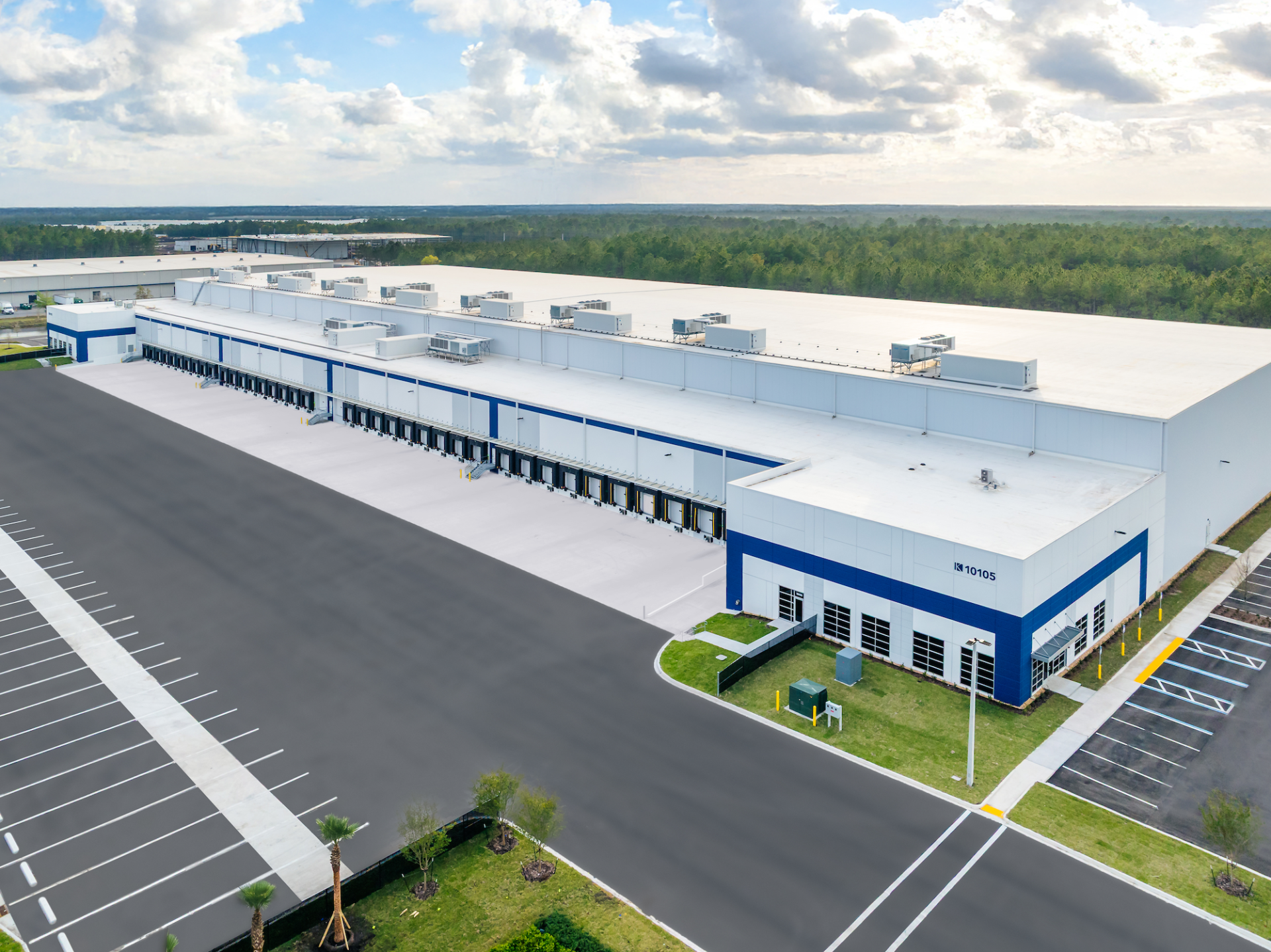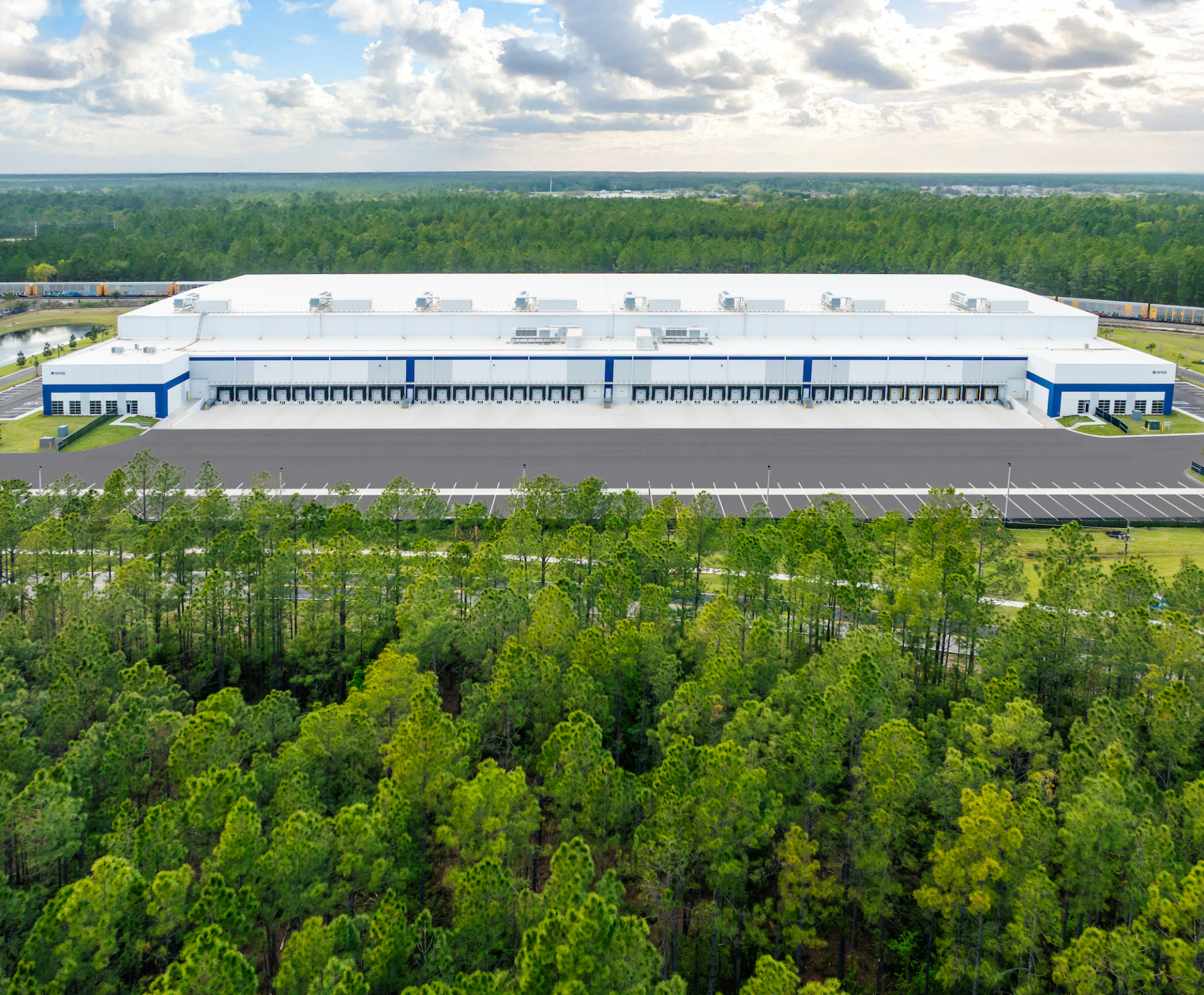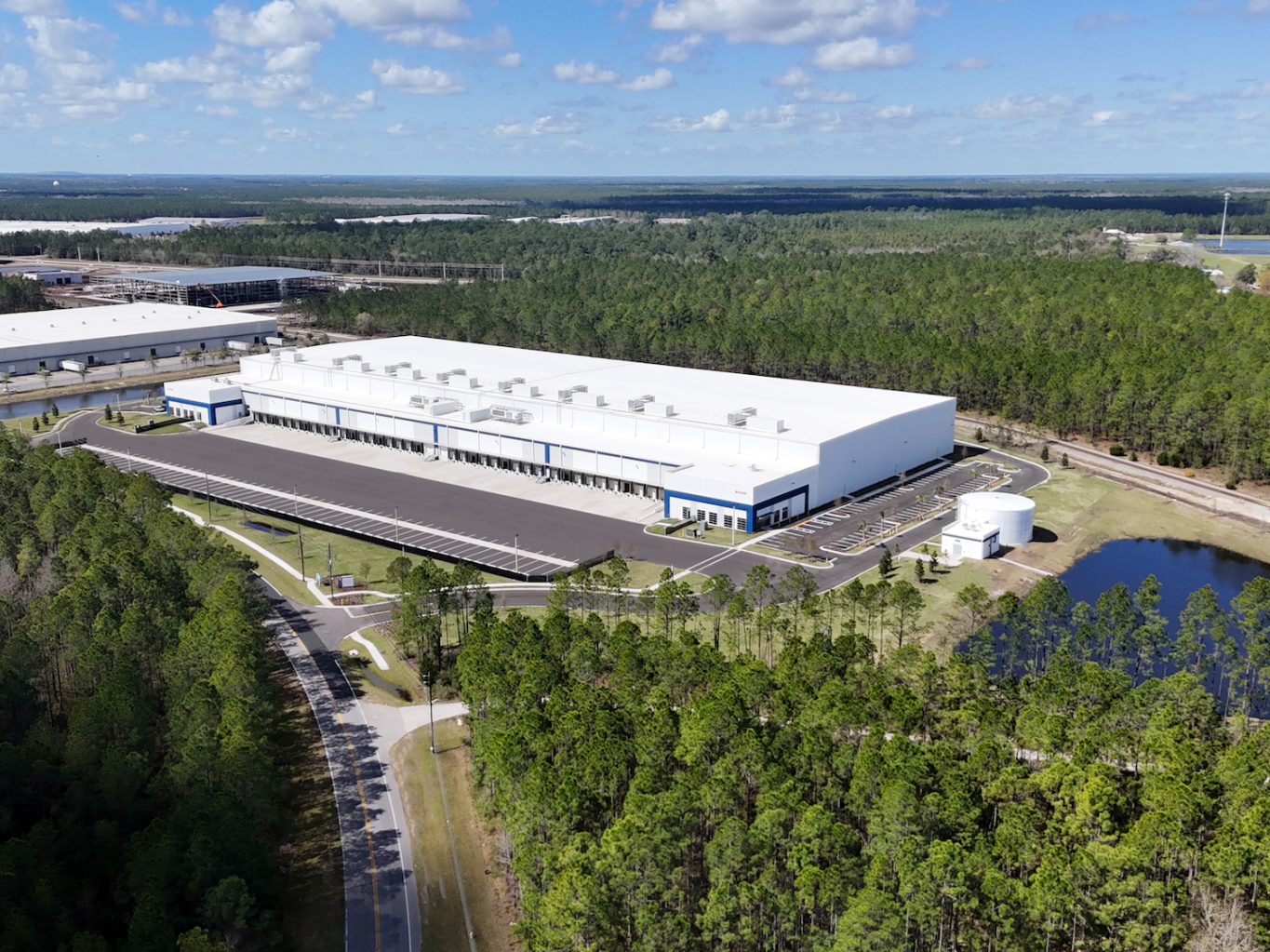
Purpose-Built for Modern Cold Chain Operations
Jacksonville's cold storage market is constrained by aging inventory and operator-controlled facilities that limit tenant flexibility. This property was purpose-built to solve both problems.
The 265,264-square-foot facility delivers 50-foot clear heights, fully convertible temperature zones ranging from -10°F to 55°F, and rare Norfolk Southern rail access — a combination unavailable in virtually any competing building in the market. The result is greater pallet density, true operational flexibility, and multi-modal transportation access that legacy facilities can't replicate.
Position matters here too. Located 25 minutes from JaxPort and eight minutes from both I-295 and I-10, the facility sits at the center of one of the Southeast's fastest-growing port and logistics corridors — without the congestion and operational constraints that come with older in-fill alternatives.
For regional distribution across Florida and the Southeast, the calculus is straightforward: higher cubic capacity, lower operating costs, faster speed-to-market, and the kind of multi-modal access that opens up supply chain options most tenants have had to sacrifice.
In a market where modern, tenant-controlled cold storage is genuinely scarce, this facility is one of the only modern, tenant-controlled cold storage options in the market.
Fully Convertible Freezer & Cooler Zones (-10°F to 55°F) – Allows operators to quickly adapt storage between frozen and chilled products as demand shifts.
Energy-efficient refrigeration systems and infrastructure.
With 50’ clear heights and over 40,000 pallet positions, the facility is built for dense storage, efficient racking, and high-throughput operations.
Rail-Served Capability via Norfolk Southern – Rare multi-modal access supporting efficient inbound and outbound product movement.
Strategic Port Connectivity – Located approximately 25 minutes from JaxPort, one of the fastest-growing container ports in the Southeast.
Immediate Availability in a Supply-Constrained Market – Eliminates the 24–36 month timeline and higher costs associated with building new cold storage facilities.